Reported evidence.
NCSOFT’s 19 November 2025 release confirms that AION 2 launched at midnight in Korea and Taiwan and was available on PC and mobile. Its September announcement describes a planned commercial model involving memberships, passes and cosmetic items. The launch is a completed service milestone; the pre-launch commercial description is not evidence that each mechanism remained unchanged throughout operation. Neither cited source reports title revenue, paying users or margin. An accompanying soundtrack release is supporting launch context and is not counted as another independent case.
1. NCSOFT / launch-day confirmation of AION 2 availability and territories2. NCSOFT / pre-launch commercial model and Korean/Taiwanese service plans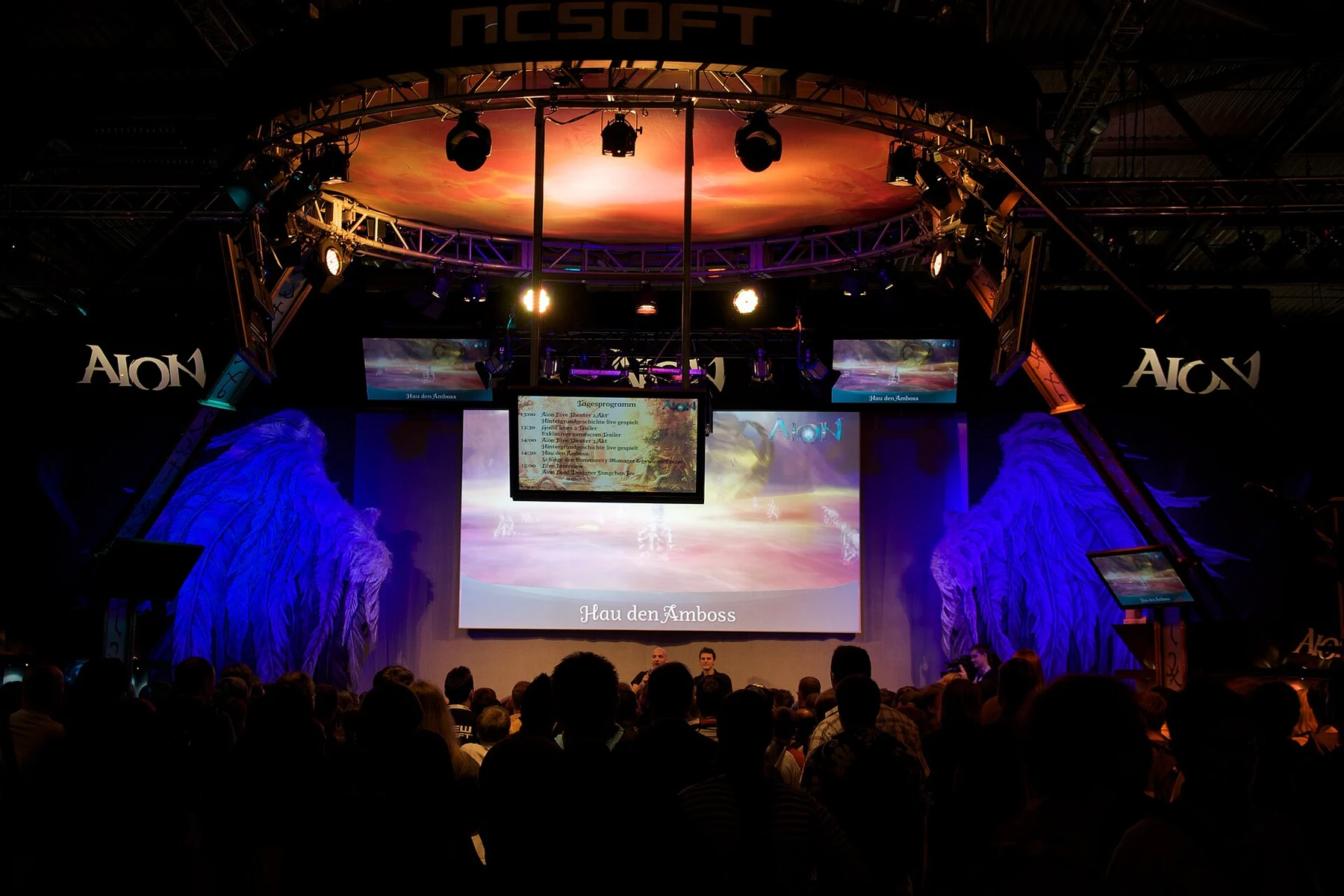
Photograph source · CC BY 2.0 for the photograph; attribution and change notice required. Separate programme/artwork/trademark rights and endorsement are not granted.
Investment interpretation.
A franchise sequel can preserve a recognizable world while changing how customers access and pay for it. The investment is attractive when the new service produces a durable routine and a commercially acceptable relationship with players. It is not simply the value of an old name multiplied by the reach of new devices. NCSOFT must allocate capital between initial production, ongoing operation and the features that maintain willingness to participate, while keeping regional and customer economics distinct.
Economic assessment.
Memberships, passes and cosmetics can have different delivery and recognition profiles. A customer payment may support obligations delivered over time rather than represent immediate earned surplus. The public pre-launch model supplies no price schedule used here and the launch release supplies no collections. Assess retained customer receipts after platform, support and content costs, and distinguish cash required for the current service from optional future territorial expansion.
Preserve the World, Re-Earn the Customer
A sequel has the benefit of a recognizable identity but must earn a new purchase or participation decision. Customers can compare it with both their memory of the original and the current alternatives available to them. Updating technology and access can improve the experience while changing the mechanics that made the franchise distinctive. The commercial task is to retain the useful core without assuming that heritage excuses service friction or an unattractive payment proposition.
The launch-day record supports a new operational product, not a transfer of every historical customer into a paying sequel account. A useful review distinguishes returning players from new entrants and evaluates how each responds after launch curiosity. Capital should support the interactions and service quality that keep those groups active economically. The franchise’s cultural visibility can reduce discovery costs, but a persistent world still needs a repeatable reason to return. That reason must be strong enough to compete with other games and the customer’s limited leisure time.
The Commercial Model Is Part of the Product
Memberships and passes can link payments to a continuing period or set of benefits, while cosmetic items can provide a different purchase occasion. Their economics are not interchangeable. The player evaluates value within the game’s progression and social environment, so a payment mechanism can affect both receipts and the perceived fairness of the experience. The pre-launch description is useful evidence of intended design, not proof of the final terms or subsequent customer acceptance.
Management should assess payment contribution together with retention and operational trust. A mechanism that raises immediate purchasing can be unattractive if it weakens the reason to remain in the world. Conversely, a transparent recurring offer can support predictable funding when customers find its benefits useful. Neither outcome is quantified in the sources. The financial review needs actual product terms, customer cohorts and settlement evidence rather than a generic assumption that subscriptions are stable or cosmetics carry negligible cost. Production, moderation and support remain real obligations even when the purchased object is digital.
Two Markets Need Separate Accounts
Launching in Korea and Taiwan creates a specific regional operating footprint, not an unrestricted global service claim. Language, customer support and payment arrangements can differ even where the same core world is used. Those differences affect acquisition cost, retained receipts and the staff required to operate reliably. A shared production base can provide scale, while local commercial execution still needs its own budget and accountability.
The allocation should identify which work is reusable and which is market-specific. Common technical improvements may benefit both services; local promotions or support can serve only one. A combined audience measure would hide those cost and contribution differences. Taiwan also cannot be treated as evidence of mainland Chinese distribution permission. The public record does not report market-level revenue, so none is allocated by population or assumed franchise popularity. The useful commercial denominator is the actual customer and payer base of each named service, reconciled with its contractual collection route.
Launch Changes the Cost Base
A live world moves from production into continuous delivery, but does not stop requiring resources. Infrastructure, customer support and new content can become more sensitive to actual player behaviour after launch. An underused system and an overloaded system create different costs. The company must be able to respond while preserving the product’s direction, rather than allow every short-term request to become an unbudgeted development commitment.
A useful operating plan separates essential reliability from optional expansion. Reliability protects the current customer relationship; additional content seeks new engagement or spending. Both may be justified, but they require different evidence and should not be measured only by the volume of work released. The accompanying soundtrack illustrates production breadth without establishing its standalone earnings or a separate licensing return. The cited sources provide no title-level cost base. Capital discipline should therefore begin with the staff and cash needed to sustain the actual launched service, then evaluate new formats and markets as distinct optional decisions.
Durability Beyond Launch Interest
Recurring purchase mechanisms can appear attractive for financing, but their quality depends on customer retention and the obligations attached to each receipt. Advance customer cash is not automatically surplus that can be distributed while benefits remain to be delivered. Platform settlements and regional commercial deductions can also change when cash becomes available. Those schedules are not disclosed here, so the launch cannot support a numerical credit capacity or an assumed monthly annuity.
Realization value would rest on a durable franchise service and an organization able to maintain it under transferable rights. A future buyer would examine whether customer routines survive changes in content, payment design and management. The current milestone supplies evidence of a completed Korean-company service opening in two named markets, with an earlier source establishing the intended model. It does not establish profitable scale. The next allocation should follow retained contribution and customer trust after the opening period, because a larger launch can be less valuable than a smaller service that reliably funds its own continuation.
Geographic analysis.
China
DSML comparisonTaiwanese service is not mainland approval. A mainland distribution and payment route must be separately established before attributing Chinese receipts.
Japan
DSML comparisonThe cited launch scope does not include a Japanese service. Franchise recognition there cannot substitute for an executed local launch or licence.
Other Asia
Reported connectionKorea and Taiwan are the two named initial markets. Shared production can coexist with distinct localization, support and cash settlement responsibilities.
United States
DSML comparisonUS MMORPG payment and customer-retention comparisons need adjustment for the actual proposition. No American opening or audience earnings are reported here.
Europe
Reported connectionThe company identifies London recording work in the accompanying soundtrack. This production input does not establish European game service or licence revenue.
Counterpoint.
A strong inherited world and two-market launch can support efficient reuse of production capability. The same franchise can face high expectations and payment-design sensitivity. The investment case is strongest when the current service earns durable trust and retained contribution, not when memberships are assumed to guarantee stable cash or launch attention is treated as lifetime demand.
Underwriting questions.
- What actual payment and benefit terms replaced or confirmed the pre-launch commercial plan?
- How do Korean and Taiwanese retained receipts reconcile with shared and local service costs?
- Which continuing expenditures protect current delivery before optional regional expansion is funded?
Primary sources.
DSML research · 8 October 2026