Makkah's Model Gives Planners a New View
Before a proposed building rises in Makkah, a planner can examine how it would affect sunlight and the skyline in a digital version of the city. NAVER's 10 June 2025 announcement reported completion of the initial platform for Makkah, Madinah and Jeddah: more than 920,000 buildings mapped across 6,800 square kilometres. The tools went beyond displaying a three-dimensional city. Terrain and slope analysis supported development calculations; building-code checks helped examine proposals before construction. Flood simulations combined earlier flood patterns with waterway information, while radar visualisation could track rain clouds. The platform gave engineers and administrators several ways to bring geography into a decision.
The October 2023 award had entered full-scale development in July 2024. In May 2025, NAVER Cloud and NHC Innovation established NAVER Innovation to develop related services, including a map-based super app. Balady chief executive Yasser Alobaidan wanted wider national coverage. NAVER Cloud executive Han Sang-young described continuing development with local partners. The initial three-city delivery supplied a working foundation for that next programme.
Source: NAVER · Initial Saudi digital-twin completion, 10 June 2025Kim Yu-Won Offers More Than a Language Model
NAVER Cloud chief executive Kim Yu-won had presented the company's broader proposition at NVIDIA's GTC in San Jose in March 2025. HyperCLOVA X was one part of an offer spanning services, data, computing, cloud and data centres. Kim wanted collaboration with NVIDIA and local partners to produce sovereign-AI projects in Southeast Asia.
His examples connected that strategy to work already familiar in Korea. CLOVA CareCall used AI welfare calls to support older people living alone. Neurocloud projects involved Korea Hydro & Nuclear Power and the Bank of Korea, institutions handling security-sensitive information. The same company was serving social care and national infrastructure, where responsibility for a service matters alongside its technical performance.
These examples explain the practical appeal of a locally adapted system. An institution needs the technology to fit its information, staff and responsibilities. Kim was offering an organisation able to work across those layers. The Saudi digital twin later gave that full-system proposition an overseas urban-planning reference, although its spatial tools and a conversational model perform different jobs.
Source: NAVER · Kim Yu-won's sovereign-AI strategy, 21 March 2025Park Sunghyun Joins the Arabic-Language Programme
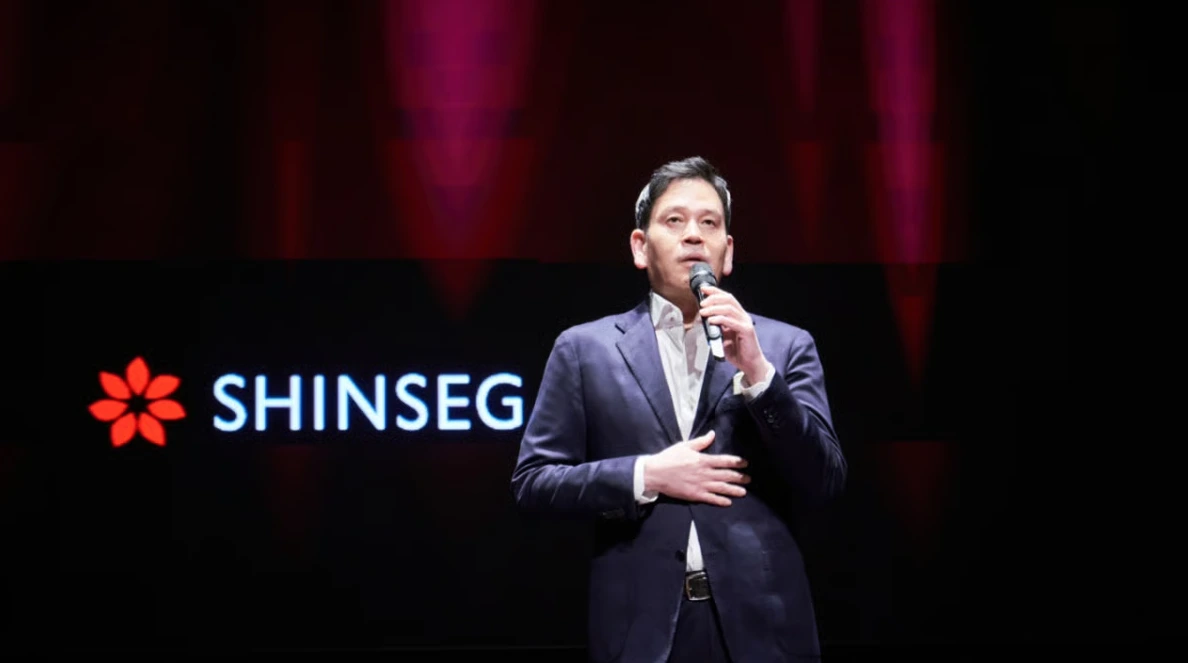
At LEAP in Riyadh in February 2025, Kim and Rebellions chief executive Park Sunghyun signed a cooperation memorandum for Saudi sovereign AI. Their proposed work combined Arabic-language models, joint identification of public and private customers and development of the local AI ecosystem. The memorandum set out a programme to pursue, separate from the delivered city platform.
The exhibition made the partners' different contributions visible. NAVER showed services for education, healthcare, media and workplace productivity, alongside cloud infrastructure and digital-twin technology. Rebellions brought an AI-semiconductor business that had attracted strategic investment from Saudi Aramco the previous year and was pursuing local commercialisation.
NAVER reported about 13,000 visits to its stand over four days. That was an opportunity to meet institutions and demonstrate tools in a market where both companies were seeking partners. Their decision linked Korean software and semiconductor development around a particular language and prospective local users. The work ahead was to turn those introductions and demonstrations into applications suited to the organisations they had met.
Source: NAVER · Rebellions Saudi cooperation MOU, 13 February 2025Citizens Get a Say in the Next Model Round
Korea's science ministry was changing how its domestic model programme selected teams. Phase 2 advanced Upstage, SK Telecom and LG AI Research through an evaluation combining forty benchmark points, thirty-five expert points and twenty-five user points. The user exercise involved forty-nine professional AI users and 185 participating citizens. It asked how useful and effective the models felt in practice. The experts also examined wider applications: Upstage's Daum and Timely integration plans and a FuriosaAI proof of concept; SK Telecom's commercial services and manufacturing, defence, legal and tax examples; and LG's agent development, reliability and international collaboration.
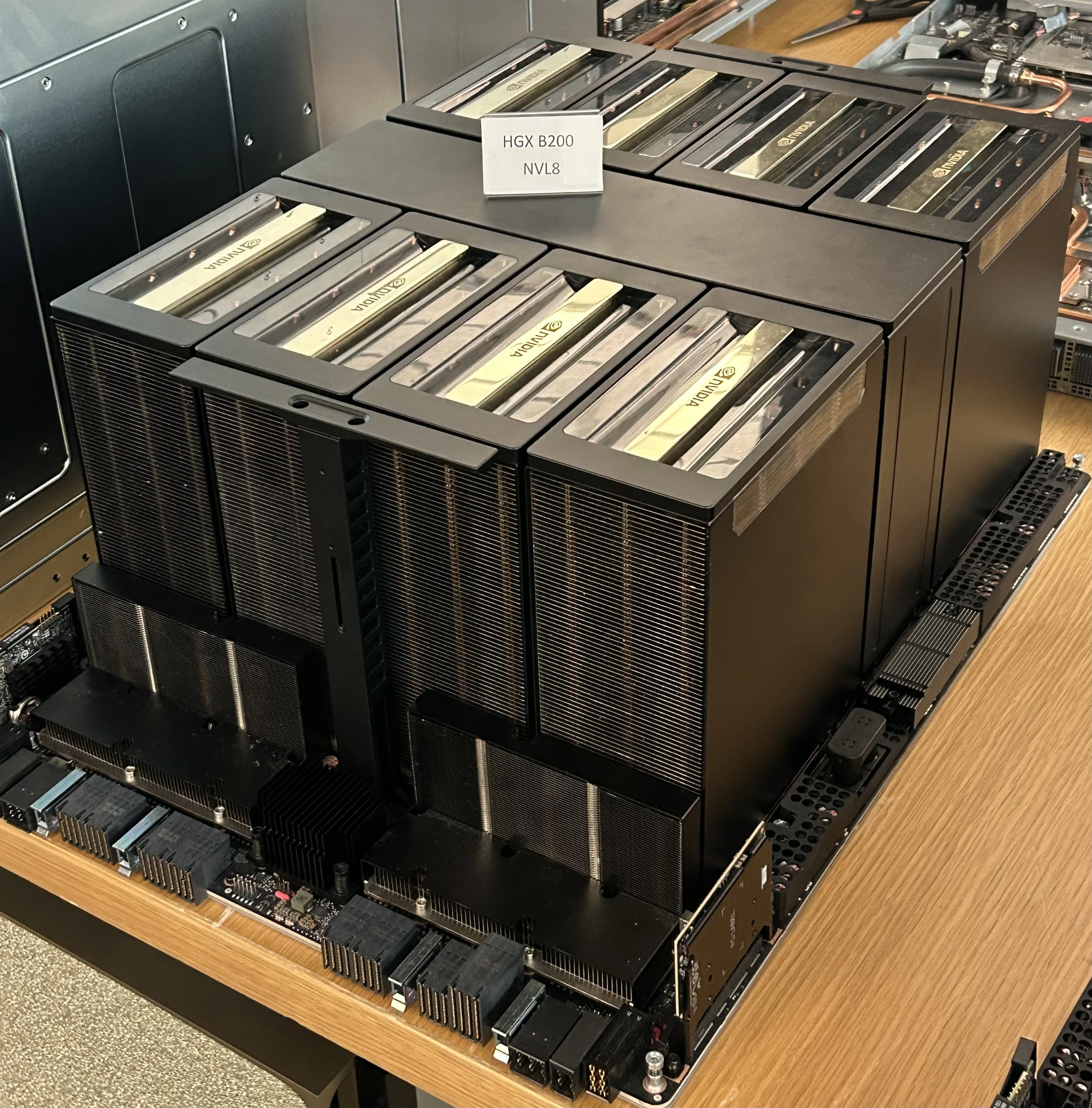
The ministry planned to increase B200 support for advancing teams from approximately 768 units in the first half of 2026 to approximately 1,000 in the second. The next development cycle consequently followed a competition in which usable services had acquired a larger place. Public support was helping teams continue the underlying research while asking them to show where that work could go.
Source: MSIT · Phase 2 results and subsequent support planChoi Soo-Yeon Brings AI Into an Existing Advertising Business
NAVER's August 2026 results showed another way to introduce AI: improve a service businesses already buy. Second-quarter revenue rose 16.2% to KRW 3.3888 trillion, while operating profit slipped 0.2% to KRW 520.3 billion amid AI infrastructure investment and other factors.
Advertising revenue grew 7.5%. NAVER attributed more than sixty percent of that growth to AI-based inventory optimisation and targeting. AI Briefing advertisements then launched in late July, after the measured quarter, extending the effort into a new product. Merchants could encounter the technology through an existing advertising relationship.
Chief executive Choi Soo-yeon also described an NVIDIA AI-factory partnership intended to expand computing services. The release expected revenue from that programme in the first half of the following year. Alongside the Saudi platform and Korea's model competition, these decisions show several organisations moving from development towards particular users: planners inspecting a site, citizens trying a model and merchants buying access to customers.
Source: NAVER · Q2 results and late-July advertising launch, 7 August 2026DSML research · 8 October 2026 · Revised 31 October 2026