Hotel Shilla's hotel and leisure business grew through the second quarter of 2026 while its brands were entering two Chinese cities. Monogram opened in Xi'an on 2 February, followed by Shilla Stay in Yancheng on 28 April. The July results put quarterly hotel and leisure revenue at KRW 199.2 billion, up 13.6%, and operating profit at KRW 24.7 billion, up 23.5%. The established Seoul and Jeju hotels both increased revenue, while the Stay business grew faster.
The expansion carried different propositions into China. Xi'an received a Monogram lifestyle hotel with dining, a lounge and extensive leisure facilities. Yancheng received Shilla Stay's business-hotel offer beside an industrial park with deep Korean ties. These were practical choices about location and the guest, alongside a Korean portfolio already serving city stays, resort holidays, meetings and dining. The quarter's growth came across that wider business, not from one newly opened address alone.
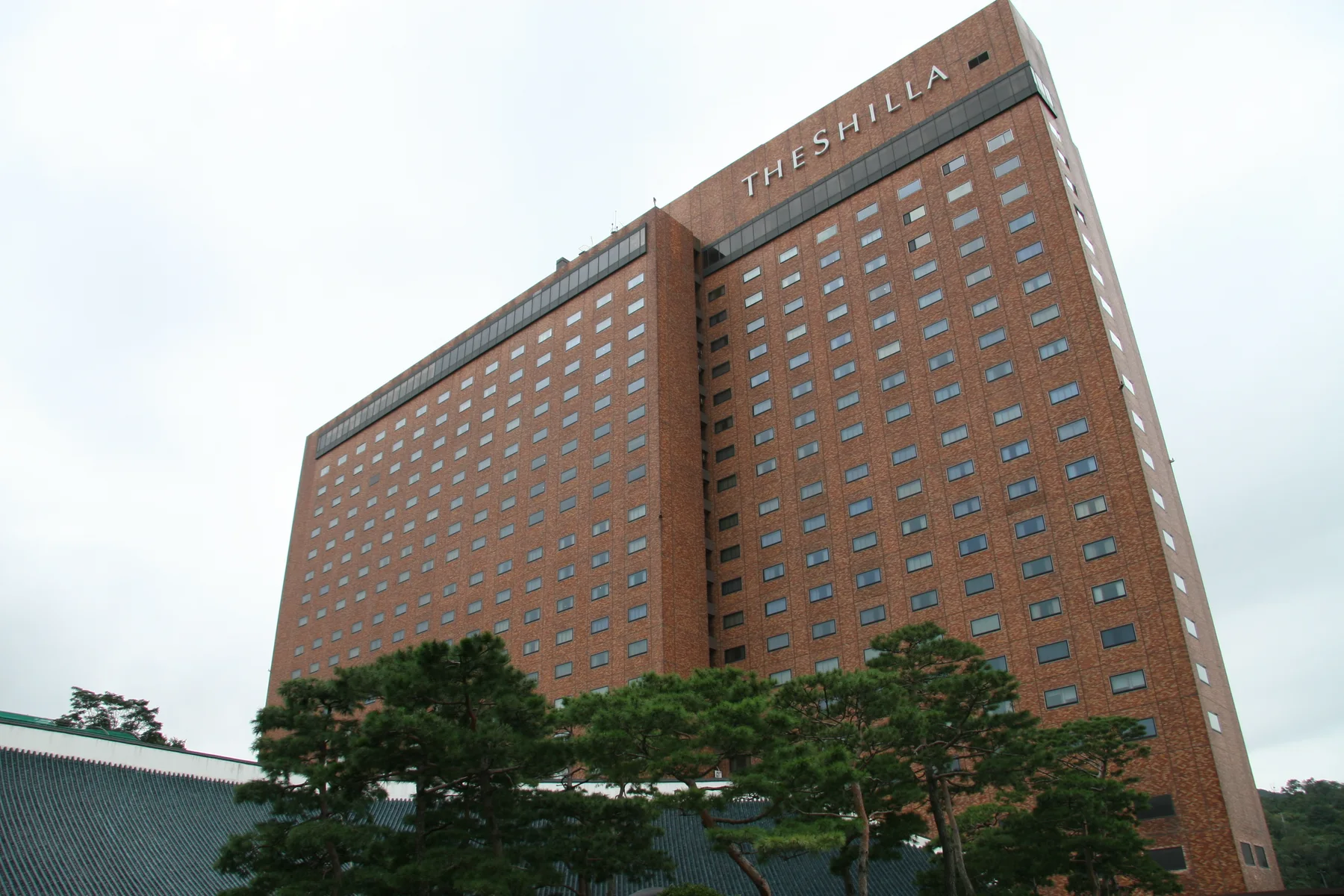
Seoul hotel revenue rose to KRW 70.2 billion from KRW 63.8 billion even though occupancy fell from 80% to 75%. Jeju revenue increased to KRW 19.1 billion from KRW 17.3 billion, with occupancy at 79% against 80%. Stay revenue reached KRW 72.2 billion, up 19.7%, and occupancy rose one point to 84%. Those results show why room occupancy by itself gives an incomplete picture of a hotel business that also sells dining, banquets and other services.
(24.7 - 20.0) / (199.2 - 175.2) = 19.6%, using KRW billions from the 31 July 2026 release.Analyst calculation: additional segment operating profit divided by additional segment revenue, comparing the same quarters.
Seoul and Jeju Grow Around More Than the Bedroom
The two original Shilla hotels have substantial businesses beyond their room inventories. The June portfolio listed 464 rooms, eight banquet facilities and seven restaurants in Seoul, and 429 rooms, six banquet facilities and six restaurants in Jeju. An overnight visitor, a wedding party and a restaurant customer can therefore all contribute to trading at the same property. Accommodation, dining and events operate together at these addresses.
The offer also differs between the two locations. Shilla presents Seoul around urban hospitality, dining, weddings, art and leisure. Jeju is organised as a year-round resort, with leisure-expert services, an adult pool, a children's cabin, glamping and moonlight swimming. These are distinct reasons for a guest to choose the property. Maintaining that range of experiences matters to a business whose established hotels were still growing while management extended the network.
Xi'an Gets the Monogram Lifestyle Format
Monogram Xi'an opened on 2 February in the city's High-tech Zone. Its 264 rooms sit within a twenty-two-storey building, with a Monogram Lounge at the top. The hotel presents itself as an encounter between the ancient city's heritage and contemporary hospitality, placing local culture alongside the service identity developed by Shilla.
The facilities give that positioning substance. Dining M offers a buffet, Rahyang serves Korean food and Ziwei provides Chinese dining. A lobby lounge sits alongside the reception and event facilities. The building also contains an indoor pool, gym and sauna, plus a large banquet hall and three meeting rooms. It can accommodate a working visit as well as a longer leisure stay.
This was the next stage of a brand that had already reached Danang and Gangneung. Hotel Shilla's chronology dates the Gangneung hotel and residence opening to July 2025. Xi'an added another overseas location early in 2026, before the second-quarter period began. The move extended both the geography and the range of stays offered under Monogram, with dining, wellness and meeting facilities in the new Xi'an city hotel.
Yancheng's Opening Follows Its Korean Business Community
Shilla Stay's first overseas hotel opened on 28 April at the Sino-Korean industrial park in Yancheng, Jiangsu. The city government's account of the ceremony recorded Korean dance and song performances, a joint countdown and tours of the hotel. Its general manager explained the choice of location through Yancheng's Korean-invested companies, commercial atmosphere and development prospects.
The hotel's own introduction makes the same connection to nearby industrial parks and active exchange with South Korea. It has 223 rooms, a buffet restaurant, Korean restaurant Dowon, a lobby lounge, banquet and meeting facilities, a gym and a laundry room. That is a recognisable business-hotel package, including services useful to visitors staying for work. It gives the Shilla Stay brand a specific local setting beyond a generic ambition to enter China.
Yancheng's government described the hotel as serving Korean corporate meetings, cultural exchange and local leisure stays. The city had already developed Korean-linked streets, cultural facilities and residential amenities. The opening was therefore part of a longer economic relationship, with hospitality being added to an existing industrial and community network. That context explains the address more clearly than a broad forecast about Chinese tourism.
Stay Becomes the Faster-Growing Revenue Line
The Stay business's KRW 72.2 billion of quarterly revenue exceeded the Seoul hotel's KRW 70.2 billion. Its footprint included business districts in Seoul, industrial and regional cities, coastal destinations and the new Yancheng hotel. Jeonju had opened in December 2024, while the Iho Tewoo property dated to May that year. The network was growing through several types of destination, not only the capital.
By the end of June, the company listed sixteen Shilla Stay locations including Yancheng, as well as Shilla Stay Plus Iho Tewoo. Its presentation describes Stay and Stay Plus as lease and management businesses, and Monogram as management. The brands thus give Hotel Shilla ways to extend its service operation beyond the two original hotels. Their increasing presence is a real portfolio change, although the quarter does not disclose the earnings of the individual new hotels.
A Stronger Hotel Quarter Sits Inside a Wider Recovery
The hotel result formed one part of a more uneven group picture. Total second-quarter revenue fell 5.2% to KRW 971.8 billion, while operating profit increased to KRW 61.1 billion. Travel retail remained much larger than hospitality by revenue and returned to a KRW 36.4 billion operating profit. Hotels were growing; duty-free was repairing its profitability. Both developments mattered to the group's recovery.
Management was also conserving resources. Hotel Shilla decided against a dividend for 2025 to secure a stable cash-flow base while restructuring retail and strengthening the hotel portfolio. Its September sustainability report recorded chief executive Lee Boo-jin purchasing about KRW 20 billion of company shares in the first half of 2026. The report paired those actions with an intention to reconsider dividends once earnings and financial strength had stabilised. Against that background, the hotel openings and stronger quarterly trading were operating developments within an ongoing rebuilding effort.
DSML research · 15 October 2026 · Revised 31 October 2026