Korean Market Structure
This assessment covers the five existing Korean-company cases dated within 8 October 2024 to 8 October 2026. They comprise memory results, a memory shipment, two separate Rebellions financings and an LG model release. They are selected observations, not an exhaustive transaction census or a representative sector index. The August 2026 Bank of Korea outlook forecasts Korean GDP growth of 3.3% and CPI inflation of 2.7% for 2026, identifying uncertainty around the semiconductor cycle and the Middle East. Those forecasts are separate macro context, not additional company events.
The credit discussion below is DSML's interpretation of reported disclosures, not proprietary diligence or company guidance. Korea offers several routes to AI expenditure, with materially different financing characteristics. Memory sells a physical bottleneck; inference suppliers must make silicon usable inside customer systems; model providers must retain billable services after distribution. Aggregate AI spending cannot be allocated mechanically among these businesses. Nor does a semiconductor-led macro expansion prove that smaller Korean developers can obtain economical working capital. Underwriting should identify the contracting entity, product boundary and payment trigger before assigning any sector premium.
Memory Economics
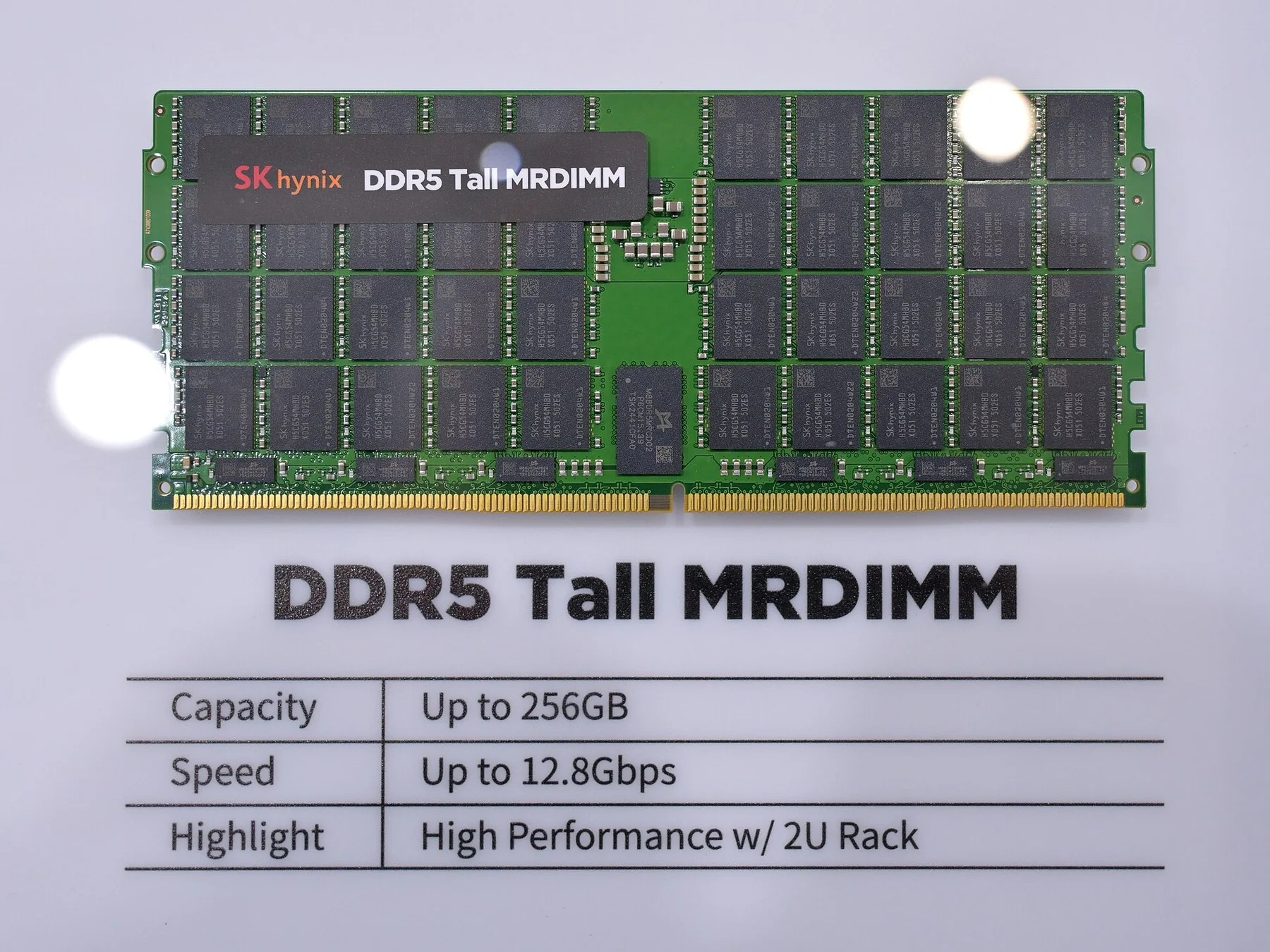
SK hynix reported preliminary FY2025 consolidated revenue of KRW 97.1467 trillion and operating profit of KRW 47.2063 trillion; HBM revenue more than doubled year on year. Its release describes capacity expansion in Cheongju and Yongin and advanced packaging construction in Indiana. Samsung announced HBM4 commercial shipments on 12 February 2026, with consistent transfer speed of 11.7 Gbps. Samsung's expectation that 2026 HBM sales would more than triple is guidance, not realized sales. Neither release provides customer-level pricing or a standalone HBM cash-flow statement.
Our calculation of approximately 48.6% operating margin, calculated as 47.2063 divided by 97.1467, demonstrates the scale of the reported earnings but is not a distributable cash margin. A financing model needs maintenance and growth capital expenditure, taxes, inventory, receivables and shareholder distributions. Qualification can support customer retention while concentrating exposure to a small number of approved system designs. Stress price, saleable yield and utilization together. Integrating manufacturing and packaging may reduce coordination costs, but gross installed capacity is not equivalent to qualified output or realizable collateral after a technology transition.
Inference Capital
Rebellions announced USD 250 million of Series C financing on 30 September 2025 at a stated USD 1.4 billion valuation. It reported first-generation deployments in Japan, Saudi Arabia and the United States. On 30 March 2026 it announced a separate USD 400 million pre-IPO round, cumulative funding of USD 850 million and the availability of RebelRack and RebelPOD. The latter release prioritizes US expansion. These are company financing and deployment disclosures; they do not establish audited revenue, current cash balances or the economics of individual installations.
Rack delivery widens the invoice and the supplier's obligations simultaneously. Components may require payment before assembly; customer acceptance may follow integration; warranty and software support persist after collection. Strategic investment is not a purchase order. Compare completed customer workloads under equal latency, reliability and power constraints, including migration and personnel costs. A lender should separate paid production deployments from pilots and require an acceptance timetable, inventory ownership, cancellation terms and supplier recourse. Raising equity can absorb ramp losses, but neither an IPO plan nor cumulative funding establishes future refinancing availability.
Model Rights
LG released EXAONE 4.0 on 15 July 2025 and announced a commercial API service with FriendliAI. The original technical report describes 32-billion-parameter and 1.2-billion-parameter models and support for English, Korean and Spanish. The report identifies public availability for research purposes. Architecture size, benchmark results and an API launch do not establish recurring commercial receipts. Open weights must not be described as unrestricted ownership of training data, source code or commercial deployment rights.
Economic capture depends on the actual licence and on the services customers continue to buy. Korean-language specialization may matter in domestic workflows, but it requires customer-level evaluation, not a language label alone. Measure the cost of a verified completed task, including inference, retries, human review, integration and support. Self-hosting can reduce hosted billing while creating maintenance costs. Review training-data permissions, third-party components, employee invention assignments and customer indemnities before treating model-related IP as enforceable security. A widely distributed model can lower acquisition friction while compressing the price of undifferentiated access.
Cash Conversion
The proposed credit discipline is an analytical framework, not a claim about DSML holdings, confidential diligence or achieved returns. Begin with accepted deliveries or enforceable commitments, then reconcile invoices to bank receipts and deductions. Corporate consolidated earnings cannot automatically service debt in a separate project company. Establish legal ownership of chips and equipment, permissible security, existing liens, customer set-off rights and whether software support survives enforcement. A physical asset whose operation depends on the seller's personnel may have limited independent recovery value.
Match financing tenor to the cash cycle and useful product life. Short customer receivables and speculative capacity expansion should not share one borrowing base. Advance rates should reflect return rights, acceptance disputes and concentrated buyers rather than headline invoice value. Run a delayed-acceptance case alongside lower selling prices and higher component costs. Currency mismatches between Korean payroll, dollar-denominated components and foreign-customer payments need separate analysis. The reviewed announcements do not disclose enough contractual detail to calculate debt-service coverage, cash conversion days or recovery rates responsibly.
Regional economics.
China
DSML comparisonFor comparison, assess permitted chip and system delivery, end-user screening and competition against locally available inference stacks. These sources do not quantify Chinese revenue. Addressable demand is not a compliant order book; model cost comparisons require the same tasks and service obligations.
Source 2Source 3Source 5Source 6Japan
Reported connectionRebellions reports first-generation deployments in Japan. require renewal, paid workload and local support evidence before extrapolating scale. The cited LG report does not establish Japanese-language capability; deployment references from one Korean supplier cannot validate another supplier's regional economics.
Source 3Source 5Other Asia
Reported connectionSaudi Arabia is a reported Rebellions deployment market. examine customer acceptance, sovereign procurement timing and local service obligations separately. This is one reported market link, not evidence of uniform economics across other Asia or disclosed Saudi contract values.
Source 3United States
Reported connectionSK hynix identifies Indiana packaging construction; Rebellions identifies US deployments and expansion priorities. distinguish construction spending and planned expansion from collectible regional sales. Customer concentration, component trade compliance and maintenance obligations remain material even with local facilities.
Source 1Source 3Source 6Europe
DSML comparisonEuropean expansion is a stated Rebellions plan, not reported European sales. For comparison, examine local data handling, licence scope, installation liabilities and procurement economics. Spanish model support enables evaluation but establishes neither European regulatory compliance nor a customer book.
Source 3Source 5Credit assessment.
- Which legally enforceable customer payments remain after acceptance conditions, rebates, cancellation rights and set-off?
- What cash remains after committed fabrication, packaging, inventory, software support and taxes, at the borrowing entity?
- Who owns each financed physical asset and IP right, and which licences or personnel dependencies impair recovery?
- Which combination of price, qualified yield, utilization and collection delay exhausts liquidity before debt maturity?
- Which customer, supplier, currency and trade-permission concentrations survive the proposed diversification?
Counterpoint.
record memory earnings, reported deployments and substantial equity backing provide real evidence of industrial capability. Customer qualification and integrated production could sustain value longer than a conventional commodity-cycle framework assumes. Conversely, rising AI expenditure can coexist with lower supplier margins, more working capital and weak model monetization. The available releases support neither a sector-wide default forecast nor a promised investment return; updated financial statements and contracts are needed before extending the historical observations into an October 2026 credit decision.
Primary sources.
- SK hynix: preliminary FY2025 consolidated financial results2026-01-28
- Samsung Electronics: commercial HBM4 shipment announcement2026-02-12
- Rebellions: Series C financing and reported deployment markets2025-09-30
- LG AI Research: EXAONE 4.0 release and commercial API announcement2025-07-15
- LG AI Research authors: EXAONE 4.0 technical report, original v12025-07-15
- Rebellions: pre-IPO financing and RebelRack/RebelPOD announcement2026-03-30
- Bank of Korea: August 2026 Economic Outlook, macro forecasts only2026-08-27
DSML research · 8 October 2026