Woohyung Lim Opens a Larger Model to More Builders
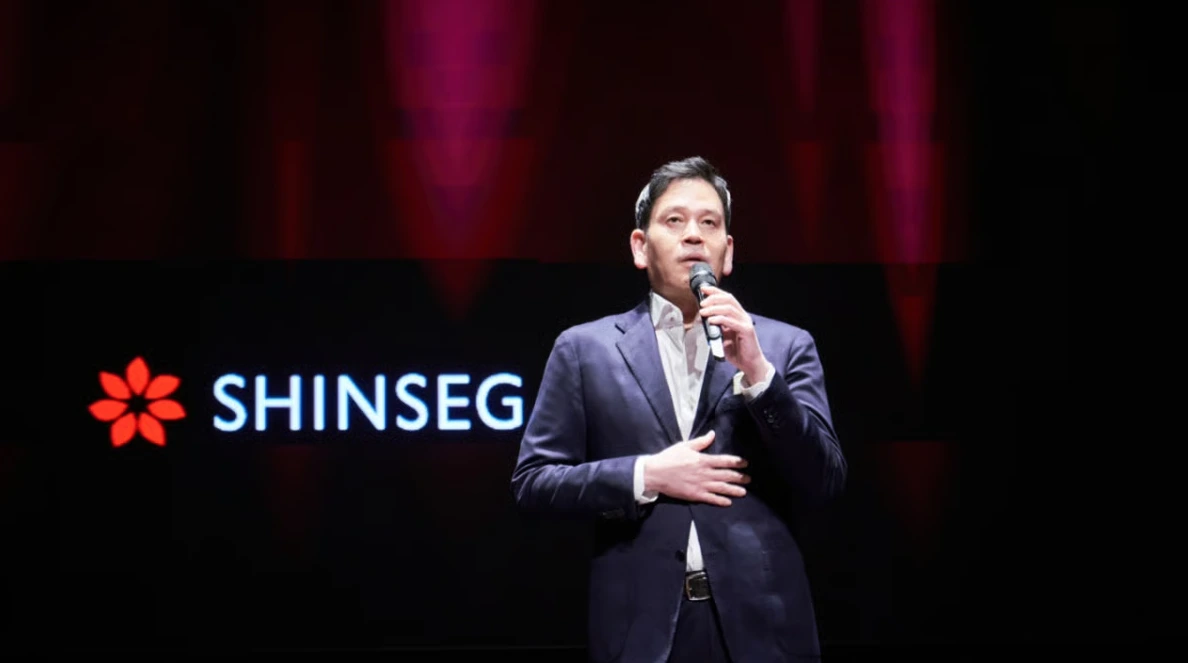
LG AI Research released K-EXAONE 2.0 on Hugging Face on 31 July 2026 and moved the model to Apache 2.0 licensing. Co-president Woohyung Lim described a team that had completed architecture, data preparation, distributed training and inference infrastructure. The decision widened commercial access to the result of that work.
The model had 750 billion total parameters, compared with 236 billion in the preceding phase of Korea's sovereign foundation-model project. French, Italian, Portuguese and Polish joined six existing languages. Lim set out further work on data quality, post-training, reinforcement learning and inference, treating the release as the beginning of another development cycle.
The Apache framework lets other organisations build commercially while retaining redistribution and notice obligations; it generally grants no trademark rights. That was a consequential change in who could develop a service from this particular release. LG was broadening participation around a publicly supported model programme while continuing to develop its own technology.
Source: LG AI Research · K-EXAONE 2.0 release, 31 July 2026April's Release Learns to Read Images and Documents
EXAONE 4.5 had arrived on 9 April under a different agreement. It was LG's first open-weight vision-language model, adding a 1.2-billion-parameter visual encoder to the EXAONE 4.0 framework for a total of 33 billion parameters.
The release extended the model's work beyond extracted text. Document layouts, pictures and charts could become part of a question, supporting the document-understanding and Korean-context tasks LG emphasised. The repository supplied image-and-text examples as well as guidance for serving the model through inference frameworks.
The serving examples let developers choose reasoning mode for tasks requiring more deliberate answers or a non-reasoning mode where latency mattered. They included both image-and-text questions and ordinary text requests. LG was supplying a way to try the new capability in software, alongside the weights and architecture.
Its published agreement allowed research and educational use, with separate authorisation required for commercial exploitation of the model, derivatives or output. That April model did not acquire July's Apache terms. The distinction follows two actual release decisions: LG opened a visual capability for testing, then gave a different, larger model a more permissive commercial starting point.
Source: LG AI Research · EXAONE 4.5 release history and architectureThe Vision Model Is Selected for Public Work
LG's July account also described EXAONE 4.5 moving into public services. It had been selected as the engine for the Ministry of the Interior and Safety's AI Safety Reporting System, with an intended workload of more than 39,000 public safety reports a day.
The company also reported adoption by the Ministry of Food and Drug Safety for AI-assisted drug review. These settings give visual document understanding a particular purpose: helping institutions work through material submitted by the public or by applicants. The announcement identified where the model would be used, without supplying a measured improvement in approval times. LG was also preparing a public platform through which people could try K-EXAONE 2.0 during the model programme's evaluation.
Source: LG AI Research · K-EXAONE 2.0 release, 31 July 2026Lee Jinsik Had Already Added a Hosted Service
A year earlier, the 15 July 2025 EXAONE 4.0 release had addressed access in another way. LG partnered with FriendliAI to launch a commercial API, letting individuals and businesses connect to the model without operating their own high-performance GPUs.
EXAONE Lab head Lee Jinsik described continued development towards an internationally competitive frontier model. The release offered a 32-billion-parameter model and a smaller 1.2-billion-parameter version for devices. The hybrid design combined quick knowledge-based answers with a reasoning mode that could work through a problem.
LG also held a partners' day with twenty-two domestic organisations to discuss cooperation. The downloadable models, smaller device version and hosted API gave those partners different ways to begin. A team could explore an application through a remote service; another could work closer to its own equipment. The API made the model accessible through a familiar software connection while LG continued developing the underlying family.
The small model also reflected a practical direction within LG's industrial setting: appliances, phones, automotive electronics and robots. The company wanted some tasks handled inside a device without an external server connection. The hosted API and on-device model therefore addressed different places where the same family could reach people.
Source: LG · EXAONE 4.0 and FriendliAI commercial API, 15 July 2025Kijeong Jeon's Team Installs a Korean Accelerator
The machinery serving those models was changing too. On 22 July 2025, FuriosaAI reported LG's adoption of its RNGD accelerator after months of performance, energy and software evaluation. Product lead Kijeong Jeon highlighted straightforward integration alongside the operating performance.
Hardware was installed at LG AI Research's Koreit Tower data centre. The teams expanded support from individual cards to multi-card servers and worked on the communication and software needed to run EXAONE. Furiosa's system included a serving framework compatible with vLLM, monitoring and Kubernetes integration.
The supplier reported 2.25 times the inference performance per watt of its tested GPU solution. Those tests used EXAONE 3.5 models with 7.8 billion and 32 billion parameters and specified context lengths, not the later K-EXAONE 2.0.
The partnership planned to offer RNGD servers to enterprise customers and extend ChatEXAONE beyond LG. That installed system supplies a different kind of follow-through from a licence announcement: Korean model and semiconductor teams had chosen and integrated equipment on which services could run. As LG widened commercial access in 2026, it already had experience with both hosted delivery and its own inference installation.
Source: FuriosaAI · LG adoption and EXAONE 3.5 tests, 22 July 2025DSML research · 8 October 2026 · Revised 31 October 2026